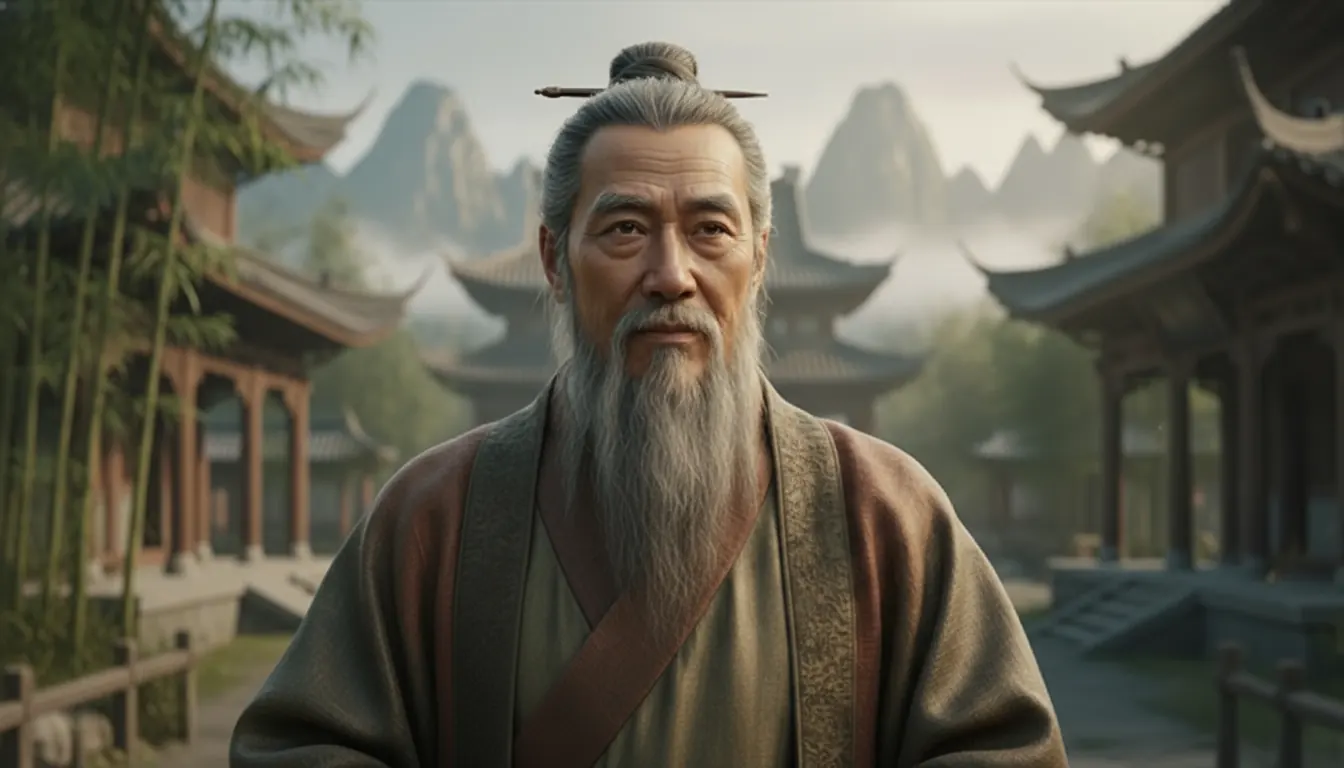
There are phrases that traverse centuries and still sound relevant today. One of them is from Confucius: "Tell me and I will forget, show me and I will remember, involve me and I will learn." Each time I read it, it shakes me, because it reminds me that true learning doesn't happen in theory or discourse, but in lived experience. Confucius wasn't thinking about exams or diplomas, but about how people could transform their character and destiny through daily practice. The phrase gains even more strength when I think about it in today's context: we live saturated with data, news, manuals, and quick courses, but we often forget that learning only becomes real when we actively engage, when we allow ourselves to be shaped by what we do, not by what we hear in passing.
Historical Context: Confucius and Stoic Rome
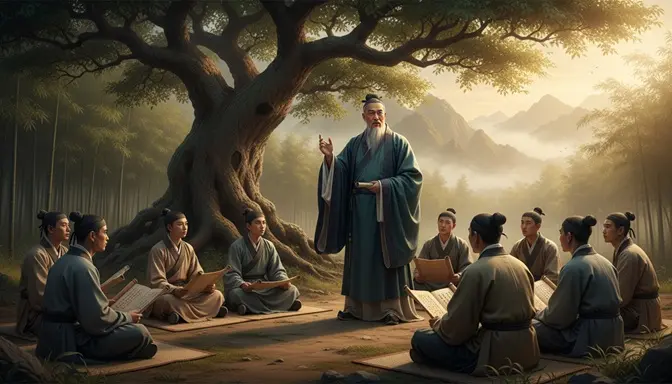
Confucius, whose original name was Kong Qiu, was born in 551 BCE in the State of Lu. From a young age, he stood out for his love of learning, gathering disciples who traveled with him to receive teaching. His vision was clear: education was the path to transform both the individual and society. For Confucius, there was no separation between personal and public life; cultivating virtue in oneself was the foundation for governing well the family, the community, and ultimately, the State.
His disciples compiled his teachings in the Analects, a compendium of brief phrases that have marked Asian culture for over two millennia. In them, he insists on ren (humanity or benevolence), li (ritual and respect for order), and yi (justice). These values were, in his vision, the pillars that could sustain a society in times of crisis. They weren't simple abstract concepts: they were applied in how one spoke, greeted, and decided. Confucian philosophy was a guide for daily action.
Stoic Rome, centuries later, was also going through political and social turbulence. Epictetus, a freed slave, taught that true freedom didn't depend on fortune or power, but on the capacity to govern one's own mind. Seneca, an imperial advisor, wrote about the need to use time well and not waste life on banalities. Marcus Aurelius, emperor, wrote reminders of serenity and humility for himself amid wars and betrayals. His Meditations are a diary of self-governance in which virtue is exercised daily.
The parallel is clear: both Confucius and the Stoics understood that in times of external disorder, the only stable way out was inner cultivation. Both philosophical systems were born as responses to instability, and both ended up leaving a legacy that still guides those seeking to live meaningfully amid uncertainty. Both bet on constant practice, on education of the will, on serenity as the foundation of order.
Confucius saw education as an integral process that wasn't limited to academic instruction, but encompassed conduct, relationships, and public life. Learning was learning to be human, to relate with dignity, to govern oneself in order to contribute to the common good. That's why his maxim wasn't a simple pedagogical advice, but a philosophy of life: no one attains virtue without fully participating in existence.
When I connect that idea with Stoicism, I find an immediate bridge. The Stoics—Epictetus, Seneca, Marcus Aurelius—repeated over and over that philosophy isn't for reading, but for living. There's no use in quoting maxims if they aren't embodied in daily decisions, if they don't modify how we act in the face of adversity. Both Confucius and the Stoics insisted on the same thing: wisdom isn't accumulation of data, it's transformation of character. They left us the conviction that daily discipline, trial and error, and constant reflection are the true sources of growth, beyond pretty words or empty erudition.
Confucius's Echo in Modern Life
Confucius lived in a turbulent time, the Spring and Autumn period, when Chinese social order was in crisis. It was an era of wars between states, palace intrigues, and loss of cultural references. In that scenario of chaos, his response was to insist on education, virtue, and daily practice as the foundations of any stable society. He believed that if each person cultivated righteousness in the intimate and in the public, the whole society would benefit. That insistence reminds me of the Roman Stoics, who also faced a chaotic world and, instead of giving up, developed a practical philosophy to maintain calm and integrity. Marcus Aurelius wrote for himself amid military campaigns, Epictetus spoke to his students from the experience of having been a slave, and Seneca reflected on the fleeting nature of time in an empire marked by violence. When I think about this, I feel there isn't much distance between their time and ours: both lived in turbulent worlds and both found in philosophical practice a lifeline.
Both traditions inspire me because they don't speak of abstract theories, but of how to act each day. For Confucius, learning was inseparable from participation: seeing, doing, making mistakes, correcting. Knowledge had to translate into just rituals, gestures of respect, decisions that reinforced harmony. For the Stoics, virtue was trained by enduring adversity, cultivating temperance, and adjusting each decision to reason. In their vision, life was a school in which each difficulty became an opportunity for training. The result is the same: wisdom becomes flesh in action, is embodied in concrete gestures, in the discipline we repeat until it becomes habit and shapes our character. I live it this way: every time I face a problem and try to apply these teachings, even in a small detail, I realize that something in me changes.
The message is powerful because it invites us to abandon passivity. Confucius asked his disciples to engage in public life, to participate in rituals, and to commit to learning as a path of personal and social improvement. He insisted that education wasn't a matter of accumulating titles, but of becoming people capable of supporting others with justice. The Stoics asked the same in different language: that each person assume responsibility for their judgments and act according to virtue without expecting external rewards. For them, social recognition was secondary; what was fundamental was internal coherence. In both cases, what matters isn't the quantity of knowledge, but the quality of actions, the constancy with which they are applied, and the ability to remain firm when the world around us trembles. And I, when I look at my own life, discover that the times I've grown the most weren't when I accumulated information, but when I dared to apply an idea with coherence.
The Parallel with the Digital Present
Today we live surrounded by information and stimuli of all kinds. Online courses promising quick solutions, YouTube tutorials explaining in minutes what used to take years of training, inspiring podcasts accumulating in our playlists, streaming conferences we can follow without leaving home, motivational phrases on Instagram sliding endlessly on the screen. Never have we had so much within reach, and yet never have we been so confused. The paradox is evident: abundance of resources, but scarcity of transformation. Why does this happen? Because consuming isn't learning. Listening without practicing is "tell me and I will forget." Looking without applying is "show me and I will remember." Only practice, trial-and-error, real involvement leads us to "involve me and I will learn."
It happens to me constantly: I read about productivity techniques or see new artificial intelligence applications and get excited, I feel that spark of novelty that seems to open an entire horizon of possibilities. But if I don't test it in my concrete projects, if I don't adapt it to my day-to-day with my routines and limits, the emotion evaporates like smoke. Memory fades and what seemed like learning leaves nothing but a diffuse echo. On the other hand, when I put it into practice, when I make mistakes and readjust, when I try different paths until I find the one that integrates into my life, then there is real learning. Error becomes teacher and experience becomes lasting root. And I say this with total sincerity: I've made mistakes a thousand times trying to apply digital tools, but each error has been much more valuable than any half-read manual.
The digital world amplifies this dilemma and multiplies it by a thousand. Social media gives us the sensation of being informed, of having an opinion about everything, but often leaves us on the surface, in the foam of the moment. We think ourselves wise because we follow philosophy accounts, because we share Marcus Aurelius quotes, or because we save Twitter threads about productivity that we never review. The illusion of knowledge replaces true knowledge. But if we don't apply those ideas, all we do is collect phrases like someone collecting postcards: nice memories, yes, but lifeless. Confucius would warn us that this path leads to forgetfulness, to the sterility of knowledge that doesn't become action. The Stoics, for their part, would invite us to close the app, to set aside the screen and practice mastery of oneself in daily life, in real conflicts, in moments of difficulty where coherence is tested. That's the difference between accumulating and transforming, between fleeting information and wisdom that integrates deeply. And every time I close the laptop or phone to truly work on what matters, I feel I'm honoring that heritage.
Stoicism as a Manual for the Digital Age
The Stoics warned against dispersion and against that human tendency to be dragged by a thousand stimuli at once. Marcus Aurelius repeated in his Meditations: "Concentrate on what you have before you, as if it were the only thing that matters." That advice is more current than ever in a world where notifications interrupt every five minutes, where a meeting can be interrupted by an email, an instant message, and a calendar alert at the same time. Marcus Aurelius wrote in campaign tents surrounded by soldiers and conflicts, and still found a minute to focus on the present task; we, with all the comforts of the 21st century, seem incapable of sustaining attention for more than a few seconds without getting distracted. I myself am often surprised looking at my phone without knowing why, as if an automatic reflex led me to seek distractions. That's when I remember Marcus Aurelius's voice and try to return to the present.
Epictetus taught to distinguish between what depends on us and what doesn't: that distinction is the perfect filter for navigating social media without getting trapped in comparisons and envy. Today I see it clearly: the perfect life that others show on Instagram doesn't depend on me, but the way I interpret those images does depend on me. It doesn't depend on me that an algorithm prioritizes certain news, but it does depend on me to decide what I read, how much time I invest, and with what attitude I do it. That teaching from Epictetus is a vaccine against digital anxiety, and I've applied it many times when I notice comparison starting to weigh on me. I remind myself: "This doesn't depend on you. What depends on you is how you respond."
Seneca, with his obsession with good use of time, seems to be speaking directly to us Netflix, TikTok, or any entertainment app users. He reminded that life is brief and that losing hours on banalities is the surest way to waste it. If Seneca wrote today, he would probably denounce the culture of infinite scroll as a form of voluntary slavery, a pastime that disguises itself as rest but, if not controlled, steals entire years of conscious life. For him, each minute should be invested in cultivating the soul, and that doesn't mean absence of leisure, but leisure with meaning, rest that restores instead of numbing. I confess that I've often fallen into the scroll trap, but I've also verified that when I substitute that time for reading, reflection, or authentic conversation, my mood changes radically.
Confucius coincided in that vision centered on self-control. Good government, he said, begins with mastery of oneself. If we can't govern ourselves, how are we going to order our environment, how are we going to contribute to the community or to society as a whole? I transfer that question to technology: if we don't learn to use it with criteria, it will be the one using us. Just as a ruler without discipline ruins his people, an individual without digital self-control becomes a slave to the machine. True digital freedom passes through the same narrow door as classical virtue: discipline, practice, constancy. And that discipline doesn't consist in demonizing technology or fleeing from it as if it were an enemy, but in learning to use it as a tool for personal cultivation instead of as a source of dispersion. Turn it into an ally, not a tyrant. Master it with intelligence, not with fear. I try to remind myself every day that it's not about rejecting technology, but about putting it at my service, and every time I achieve it I feel I've taken a step toward that inner freedom the sages spoke of.
Learning in the Age of Artificial Intelligence
Here enters the paradox of our time. New technologies, and particularly artificial intelligence, can become formidable allies for learning better. I can use AI to organize my notes, generate summaries, propose examples, receive immediate feedback, simulate scenarios, or practice conversations in different languages. I can ask it to act as a coach, to give me study guidelines, or to design a work plan adjusted to my goals. All of this multiplies learning opportunities and places us before a universe of resources that previously seemed unimaginable.
But if I limit myself to asking for answers without reflecting, AI becomes a hollow shortcut. It's like copying on an exam: I get a quick result, but there's no transformation. I know the solution, but not the path; I have the data, but not the wisdom. The risk is confusing comfort with growth, speed with depth. That's why it's so easy to feel we know more than we really know, because we've seen the answer in seconds without having integrated it into experience.
What changes the game is using AI as a practice companion. If Confucius asks me to get involved and the Stoics ask me to train virtue, AI can be that sparring partner that helps me practice more, make mistakes with low risk, repeat until I improve. It can correct me like a constant tutor, propose challenges and point out invisible flaws, serve as a mirror when I don't have someone available. The key is conscious use: not giving it the helm, but taking advantage of it as a mental gym. Technology doesn't make me wise: it gives me the terrain to train my wisdom. Just as the gym doesn't make you strong if you don't lift weights, AI doesn't make you wise if you don't commit to practice, to effort, to deliberate repetition.
The question we should ask ourselves is: how do I use AI to transform myself instead of entertaining myself? How do I move from initial fascination to conscious habit? If Confucius lived today, he would perhaps ask us not to stay in the shine of the tools, but to use them to train virtue, to polish our humanity. The Stoics, for their part, would ask us to evaluate honestly whether our use of technology brings us closer to temperance and justice or distances us from them. They would insist that such a powerful instrument requires an equally strong character, and that without discipline what seems like progress can become dependency or distraction. AI is a reflection: it returns what we are and amplifies it; it's up to us to decide whether it amplifies our virtue or our dispersion.
Everyday Examples
At work, reading about leadership is useful, but truly leading, with a real team and concrete problems, is where you really learn. It's not the same to memorize management theories as to face a conflict between colleagues, negotiate an impossible deadline, or encourage a discouraged group. There, artificial intelligence can help me with communication scripts or feedback suggestions, but the practice is mine. The difference between the manual and experience becomes palpable: the first gives me notions, the second changes me. When I live the situation, with my successes and my errors, that's when I truly understand what it means to lead.
In study, something similar happens. Watching a video about philosophy can be inspiring, it opens my mind and gives me new ideas, but writing an essay from scratch, discussing with other people in a forum, presenting an idea in public and receiving difficult questions is what truly fixes learning. Technology offers me access to entire libraries and global debates, but the commitment to order my ideas, defend them, and listen to criticism is irreplaceable. Knowledge settles in interaction, in friction with others, in error that forces me to review my arguments, and in the satisfaction of seeing how little by little I'm able to express myself with greater clarity.
In personal life, reading about meditation guides me, gives me maps and warnings, but sitting each morning in silence, even if only for five minutes, is what transforms my mind. At first the mind escapes, I get impatient, I doubt the utility of the exercise, but with time I discover that in that simple practice there is a profound change: I learn to observe myself, to brake the impulse, to recover calm. Technology can offer me guide apps, bells that mark time, or gentle reminders on the screen, but I live the experience. No algorithm breathes for me; no device substitutes the discomfort of being with myself or the reward of serenity that appears little by little. In that gesture repeated day after day is the true transformation: the passage from theory to lived experience, from words to practice that changes life.
Tying the Threads Together
When Confucius speaks of getting involved and the Stoics speak of practicing, I feel both are warning me against the temptation of superficiality. Today that temptation has a name: speed, quick consumption, multitasking. We live jumping from one tab to another, from a headline to a short video, from one notification to the next, and we confuse movement with progress. But classical philosophy and emerging technology don't have to be opposed, nor are they irreconcilable poles. They can complement each other if we accept a simple yet demanding principle: what matters isn't what you know, but what you do with what you know. That difference, apparently small, separates sterile accumulation of information from true personal transformation.
If Confucius invites us to educate ourselves and the Stoics invite us to cultivate virtue, technology can be the training ground where we test both things. It's not enough to read digital books or follow online courses if there's no practice that turns them into habit. What's important is not to confuse the means with the end. Tools change—today we have platforms, algorithms, and applications—but the essence remains the same: learning by doing, making mistakes with humility, and growing from experience. Only when we stop to apply what we've heard or seen, when we dare to experiment and fail, does teaching become wisdom. That's the lesson shared by Confucius and the Stoics, and that we can rediscover today in use.
Toward a Practical Synthesis
From Confucius I take the idea that education is the root of all transformation. For him, it wasn't a decorative complement, but the foundation of a full life and a stable society. In each gesture, from greeting to the way of governing, education shaped character and created harmony. From the Stoics I take the conviction that virtue is exercised every day, like someone training an invisible muscle that only strengthens with constant repetition. They reminded us that each moment is an opportunity to practice temperance, justice, fortitude, and wisdom. And from technology I extract the possibility of having an infinite laboratory to apply and rehearse: a testing space that never rests, where each error can become immediate learning and each idea can be put into action without waiting for perfect conditions.
If I mix those three ingredients, a powerful path appears: learning by practicing, with the help of digital tools, but always with an ethical and philosophical compass. It's not enough for technology to give us speed or comfort; we need it to be an ally that amplifies virtue and not distraction. That path requires constancy: it's not enough to get excited one day and forget the next. Confucius insisted on repetition as the way to mastery, on cultivating discipline until virtue becomes natural. The Stoics spoke of daily discipline as a form of soul training, and warned that losing a day of practice was taking a step back in character. Technology, if used with criteria, allows that continuous repetition: reminders, routines, progress metrics, applications that show us improvement graphs and encourage us to continue when motivation falters. The modern and the ancient meet in persevering practice, in that humble effort that day by day converts theory into embodied life and intention into real transformation.
Detailed Comparisons: Ren and Logos
In Confucius, the concept of ren alludes to humanity, to benevolence that recognizes shared dignity. In the Stoics, logos is the universal reason that traverses all things. Both point to the same thing with different language: there's a greater order that transcends us and, if we live in harmony with it, our life becomes fuller and more just.
For Confucius, living with ren was treating others with respect and justice, acting with empathy, and recognizing that we aren't islands, but part of a community. For the Stoics, living according to logos was accepting what we don't control, acting with virtue in what does depend on us, and maintaining equanimity amid adversity.
When I translate these ideas to the present, I see that ren can inspire us to design more human technologies, more inclusive, more respectful of each user's dignity. And logos can guide us to use reason and discipline not to lose course amid the avalanche of information. Between both emerges an ethical compass that reminds us that technology must be at humanity's service and not the other way around.
Conclusion
Confucius left us the formula 2,500 years ago, the Stoics reaffirmed it in Rome, and today we need it more than ever. The invitation is clear, but it's also broad and deep. It's not just a motivational slogan for a specific day, but a life program that demands constancy. Don't stay in listening or looking, because that's barely scratching the surface of things. Immerse yourself, get fully involved, practice until exhaustion, make mistakes without fear, and start again with the same humility. That cycle of trial and error is what shapes character, just as water, drop by drop, pierces stone.
Use technology as an ally, not as a substitute. Allow it to be your laboratory, your sparring partner, your rehearsal companion, but never delegate to it your most intimate responsibility: that of transforming yourself. Make each day a philosophical exercise, a conscious practice in which the smallest gestures—the way you respond to a message, the attention you give to a conversation, the calm with which you assume an error—become wisdom trainings. Remember that true learning isn't accumulating data or collecting phrases in digital notebooks, but transforming yourself step by step, experience after experience, into a more serene, more just, and more conscious version of yourself.
That transformation doesn't arrive in one blow, but in the patience of habit. Confucius spoke of cultivating virtue like someone tending a garden: it requires time, constancy, and care. The Stoics spoke of exercising the soul like an invisible muscle that strengthens with each right decision. We, in the age of technology, can learn from both: use modern resources to practice more, but without forgetting that wisdom isn't downloaded, it's lived. The conclusion is clear: it's not enough to admire ancient ideas or be fascinated by new tools. The challenge is to integrate them, make them flesh in daily life, until each act reflects the union of philosophy, discipline, and conscious technology. This is where the art of Wu Wei reminds us that transformation doesn't come from forcing, but from practicing with intention. My book develops these ideas in depth—mindfulness, AI, and 21st century Stoicism—converge in this simple truth: the path itself is transformation. To learn, as Confucius said, is not to accumulate. It is to change. You can read more about me and this approach.