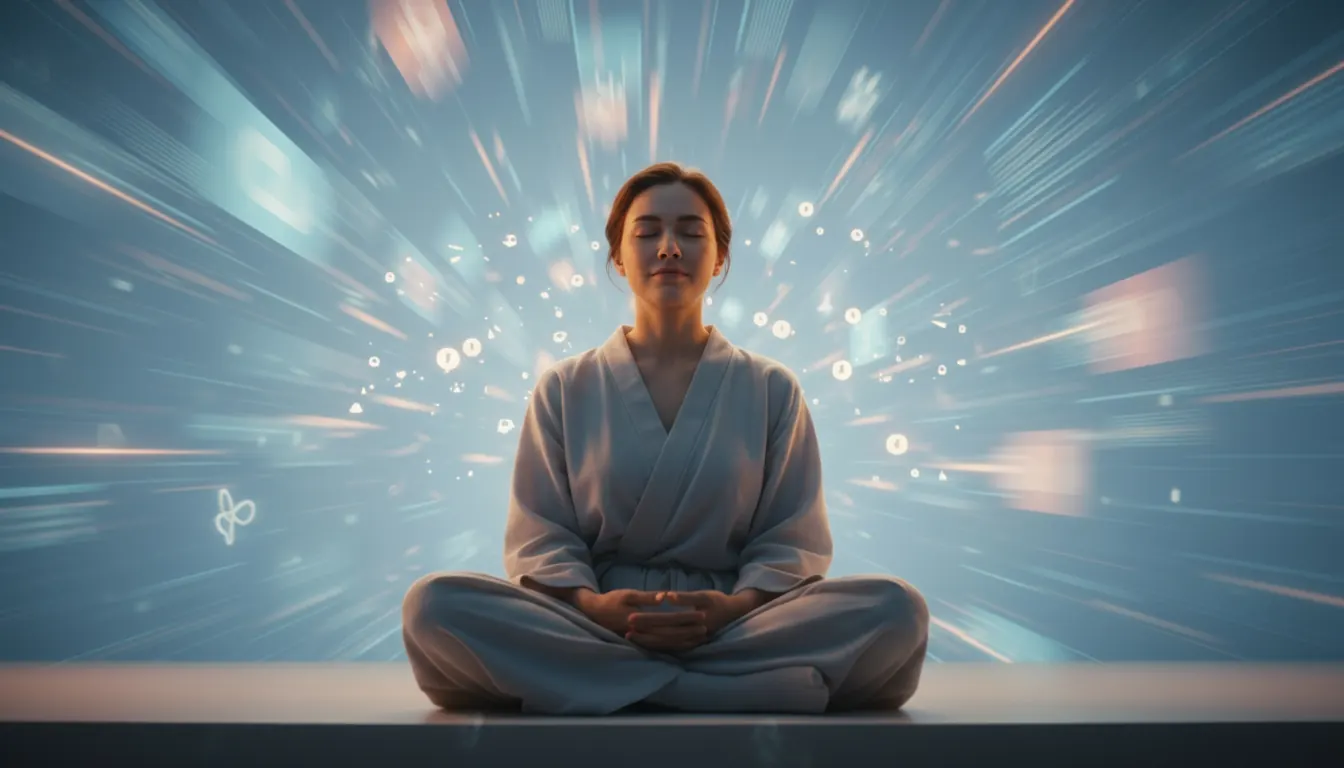
Calmness as a starting point
I live surrounded by screens, notifications, and algorithms that tell me what to think, what to watch, and even when to rest. Sometimes I feel that everything is designed to drag me into a constant stream of stimuli, a current that doesn't let me breathe or choose. However, I am increasingly aware that the real leap is not in running faster, but in learning to slow down with awareness. Calmness is not a luxury or a trend: it is a form of practical intelligence. In this time of digital noise and constant urgency, cultivating serenity has become my most effective tool for protecting my mind, making better decisions, and conserving the energy that truly matters.
I have learned that calmness is a starting point, not a destination. It is the space from which clarity and judgment are born. When I manage to establish that mental foundation, everything else flows: work, creativity, decisions. I start each day breathing, observing, reconnecting with my body before entering the flow of information. That small routine has completely transformed how I use technology. It is my invisible anchor, a reminder that attention is the fuel for everything I do.
Over time I have understood that this calmness does not arise spontaneously. It is a process of conscious design, just like designing an architecture or a digital system. It needs structure, consistency, and purpose. Serenity thus becomes a discipline of the mind,
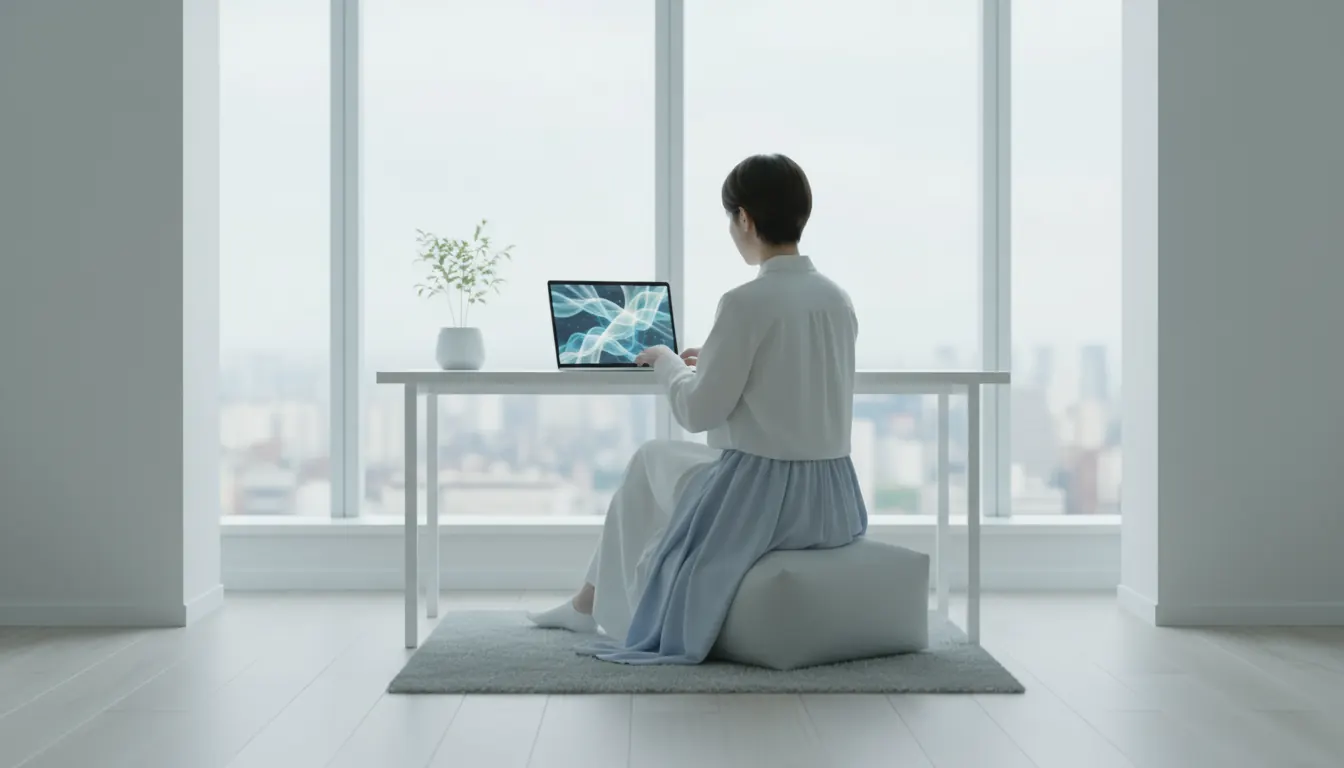
a kind of inner engineering where each breath is a line of code that reprograms my way of thinking. Every time I stop to observe instead of reacting, I am training a type of intelligence that algorithms cannot replicate.
Calmness, understood as an active attitude, is what allows me to see the complexity of the world without feeling overwhelmed by it. It's not about living isolated, but maintaining a stable core amid the turbulence. I have discovered that when I work from that center, the quality of my ideas improves, my communication becomes clearer, and my relationship with technology more balanced. Even mistakes stop being frustrating: they transform into useful information. That functional serenity helps me stay on course when everything changes.
I have found that calmness is also contagious. When I talk to other people, when I share my way of working, I notice how the pace naturally slows down. The conversation becomes more human, more real. In an accelerated environment, a calm mind becomes a lighthouse. It's curious how, without intending it, calmness generates trust: it conveys the feeling that there is direction, even in uncertainty.
When the mind is agitated, even the best tool becomes noise. When it is serene, even the simplest thing can become a source of lucidity. I see it in the small details: in how an idea that seemed banal transforms into a solid project when I think about it calmly; in how a difficult email is answered with empathy if I give myself a few seconds before writing. That tiny difference changes the tone of my day, the rhythm of my work, and how I relate to others. Calmness doesn't separate me from the world: it allows me to participate in it with more presence, more judgment, and less wear.
Sometimes I compare this practice to the energy management of an operating system: if you saturate the processor, everything slows down; if you clean unnecessary processes, everything flows better. My mind works the same way. When I eliminate redundant thoughts and simplify the essential, I recover speed without losing clarity. That combination of serenity and effectiveness is what, in practice, allows me to move forward with less effort and more meaning.
Presence in times of distraction
That is the most beautiful paradox of calmness: it seems like stillness, but it is pure movement. An internal, deep, and sustained movement that does not seek immediate results but lasting balance. The more I cultivate it, the more I realize that there is nothing more modern than a calm mind in a world that doesn't stop running.
Attention has become the scarcest commodity of our time. In every digital corner there is a claim, a flash, an interruption. I have understood that distraction is not an accident, but a design. Every sound, every notification, is designed to tear us from the present moment and direct our mind toward what others want us to see. That silent war for attention erodes us without realizing it. That's why, rather than resist, I have decided to train my ability to choose. I don't want to live with autopilot on.
I learned that I cannot control the flow of information, but I can control how I interact with it. I no longer start the day with my phone screen; I start it with myself. Instead of diving into social media or emails, I spend a few minutes breathing and becoming aware of how my mind seeks stimuli even before being fully awake. This simple gesture is my first training of the day. It reminds me that my attention is a finite and valuable resource, and that every click, every screen scroll, has a cost. That time I give away does not return. That's why, every morning, I choose again what I will give presence to.
Distraction is not just a waste of time: it is a loss of depth, and with it, identity is lost. When I jump from one thing to another, I don't just leave tasks half-done; I leave fragments of myself in each change of focus. It's as if I dissolve between tabs and notifications. Recovering presence has become a practice of mental and spiritual hygiene. I don't need to disconnect from the world, but I do need to relearn how to connect with myself. In that balance lies the key: it's not fleeing from technology, but using it with judgment, with intention, with awareness.
I have discovered that caring for attention is not a restriction, it is a form of freedom. The more I choose where I put my energy, the lighter my mind becomes. I begin to notice a difference between noise and
information, between the urgent and the essential. In that clarity, the ideas that really matter are filtered. It is not an act of renunciation, but of conscious selection. I don't need to know everything, I need to know what's important. And for that, silence becomes my best tool.
Silence is not emptiness, it is a fertile space. In it arise the ideas that are not born amid distractions. I use it as a personal laboratory: I sit without music, without a screen, without stimulus, and observe what remains when everything external turns off. At first it is uncomfortable, because the mind rebels. But when I get through that first inner noise, something like a current of peace arrives. That's where intuitions appear, the invisible connections that were covered by excess data. In that silence I find answers that no search engine would give me.
I have come to think that silence is the most advanced technology I know. It doesn't need a battery or connection, but it recharges all the others. It returns to me the ability to think without interference, to listen without haste, to read without anxiety to finish. When I introduce silence into my day, I don't lose productivity: I multiply it. In that interval where it seems I'm doing nothing, I am reconfiguring my attention, readjusting my mind to its natural rhythm.
I practice small rituals to protect that state: moments without a screen, walks without headphones, meals without a phone. I don't do it out of nostalgia for the past, but out of necessity for the present. I don't want to live scattered, I want to live awake. And presence, in times of distraction, is the most radical act of lucidity I can exercise.
Mental and digital order
That morning calmness practice has redefined my way of working. Now I understand that the mind functions like a complex system, full of processes, connections, and memories. If you give it an excess of noise, it returns impulsive, scattered, and often reactive decisions. If instead you offer it silence and order, it responds with clarity, purpose, and a sense of inner mastery. When I breathe and observe my thoughts, I don't seek to eliminate them: I seek to understand their origin, recognize their rhythm, coexist with them without letting them drag me. That pause has become my refuge, my compass, and my calibration point. In it I find
control, not over the world, but over the way I interpret and inhabit it.
Over time I understood that the disordered mind is like a desk full of unclassified papers: everything seems urgent, but nothing is really important. Serenity does not appear suddenly, it is cultivated with the same discipline with which you care for a garden or program a system. It requires practice, patience, and design. I apply it in how I consume information, in how I communicate with others, and in how I organize my physical and digital environment. Every choice counts: what I read, who I talk to, what stimuli I let in and which I leave out. Every time I choose not to open a notification, I am choosing a fragment of freedom, a micro-decision that protects my inner space.
I have discovered that maintaining that mental and digital order is a form of respect toward myself. When my mind is clear, ideas flow naturally; when it is saturated, it blocks. In that sense, order becomes a tool of creativity, not rigidity. I no longer measure progress by the number of tasks completed, but by the depth with which I engage in each one. That perspective has given me back a sense of real control. It's not about doing more, but doing better, consciously choosing what deserves my attention and what doesn't.
When I manage to maintain that balance, productivity stops being an obsession and becomes an inevitable consequence. Focus replaces multitasking, intention replaces haste. I discover that by reducing excess, impact increases. Less dispersion, more direction. Less haste, more depth. And in that intermediate space, where before there was only noise, true efficiency is born: the kind that doesn't exhaust, but nourishes.
Keeping my digital environment clean has become a symbolic and therapeutic act. I delete old emails, organize folders, remove applications that don't add value, update passwords, and deactivate unnecessary notifications. I don't do it for aesthetics, but for mental hygiene. A saturated desktop reflects a saturated mind. A clear space invites you to breathe and think more clearly. That visible order translates into an invisible order that affects my emotions, my ability to concentrate, and my general well-being.
I have come to consider digital order as a modern mindfulness practice
Just as in meditation you observe the breath, here I observe the flow of data. I stop, review, classify. I don't want to live enslaved by my tools; I want them to work for me. That's why I review my systems every week: my inbox, my notes, my files, my projects. I turn it into a mental cleaning ritual, a way to make room for the new. Every file I delete is a small liberation, a decision that reminds me that order is not control, it is clarity.
That clarity, once established, not only improves my performance, it also improves my mood. I feel that I can breathe deeper, think more broadly, and decide more calmly. Order, in its deepest version, is not a whim or an obsession: it is a form of respect for time, for attention, and for vital energy. Every time I enter my clean digital environment, with clear folders and organized projects, I feel that I am entering an orderly extension of my own mind. And that gesture, so simple, radically changes my way of working, creating, and living.
Artificial intelligence and human consciousness
Artificial intelligence has been integrated into my daily life. It helps me think, write, organize, create, and sometimes even imagine possibilities I didn't see before. But I don't intend to let it decide for me. I use it as an extension of my mind, not as a substitute. If I work from calmness, AI amplifies that clarity; if I work from haste, it amplifies chaos. Technology reflects my inner state. That is its paradox and its power: it doesn't transform what I am, it reveals it.
When I observe the relationship I have with artificial intelligence, I realize it is an emotional and cognitive mirror. If I approach it from curiosity, it returns learning; if I approach it from anxiety, it returns confusion. AI has no intention, but its use does have consequences. That's why I try to relate to it from calmness, like someone approaching fire: with respect, with awareness, and with the desire to understand its nature without getting burned.
I like to imagine this collaboration as a dance between precision and presence. AI provides speed, memory, and analysis, but I am the one who gives it rhythm, meaning, and direction. It can analyze millions of data in seconds, but it cannot perceive the tremor in a voice or the emotion behind a look. That sensitivity remains human, and it is precisely what balances the equation. When I manage to maintain calmness, even the most complex projects become manageable, because I don't compete with the machine: I cooperate with it. I work with its strength without ceding my consciousness. AI doesn't replace creativity; it expands it when the human mind marks direction, when judgment acts as a moral and aesthetic compass.
I have learned that AI is a great teacher of humility. It forces me to ask myself what part of the process remains essentially human. Where does calculation end and intuition begin? Where do logic and empathy intersect? Every time I delegate a task to an automatic tool, I stop to think what that delegation teaches me about myself. Sometimes I discover that I have lost patience; other times, that I still lack depth. AI doesn't substitute me, it reveals me.
It also teaches me about limits. Not everything that can be done should be done. Learning to say no to certain automations, to certain shortcuts that promise to save time but steal learning, is part of this path. I don't want a completely optimized life; I want a life with nuances, with pauses, with decisions that remind me that I am still human.
Sometimes I feel that using artificial intelligence is like working with a new sense: it amplifies what I look at, but it depends on where I look. If I seek productivity without purpose, it returns speed without soul. If I seek clarity and focus, it helps me reach them. That's why calmness is so important: AI doesn't create intention, it only amplifies it. And if my intention is confused, its results will be too.
Technology, fundamentally, doesn't change us: it multiplies us. It multiplies the good and the bad, wisdom and noise, consciousness and distraction. That's why I insist on training serenity as a cognitive muscle. No algorithm, however sophisticated, can replace the judgment of a serene mind. No database can imitate the genuine empathy of
a human conversation. Patience, understanding, the ability to interpret emotional context remain the true differentiators in this era.
Artificial intelligence has taught me that the future is not about choosing between humanity or technology, but learning to unite both forces with balance. Calmness, empathy, and critical thinking are the new languages we need to master. The tools I use reflect this balance. It is trained like any other skill: breathing before acting, observing before opining, and choosing before automating. Only then does artificial intelligence cease to be a threat and become an ally. My trajectory has taught me that well-used technology amplifies our humanity.