When every AI giant pulls in a different direction... and I just want to know which one to use
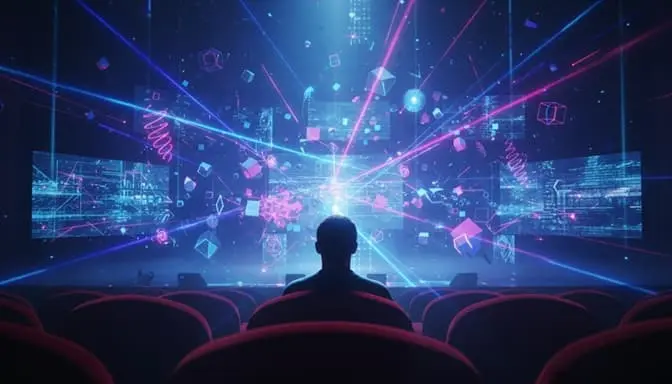
There are days when I wake up with the feeling of living inside a strange theater, one of those where the actors don't follow a common script, but improvise endlessly, as if each one had rehearsed their own play in a different building, with different directors, and yet they were forced to share the stage. In that theater—which sometimes seems more like a circus, other times a laboratory, and other times a battlefield—the giants of artificial intelligence come and go without apparent order, launching their novelties as if they were fireworks that illuminate the sky for just a few seconds before being replaced by the next ones.
Sometimes I close my eyes and imagine the scene in more detail. The teams from OpenAI, Anthropic, and Perplexity waiting behind a curtain that never finishes falling, each one breathing deeply before jumping into the light. As soon as someone announces a novelty, everyone reacts as if they couldn't afford to be left behind: GPT-5.2 performs a mental pirouette so elegant it almost seems to do it for fun; Claude, solemn, raises a hand to say he now "reasons better," like someone who suddenly becomes enlightened in the middle of a Tibetan monastery; and Perplexity, meticulous, shows its sources like an exemplary student who wants the teacher to notice how much effort they've made.
And I, meanwhile, remain seated in my seat, a seat that I don't know if I've chosen or if someone has decided I should occupy. I look at that scene and don't know if I should applaud enthusiastically, point out errors with surgical precision, take frantic notes, or simply get up, walk toward them and ask them what the hell all this means. Because one thing is for technology to advance, and another is to feel how you're dragged by a current you haven't asked for, that you don't control, and that, nevertheless, affects every corner of your day.
When the show ends—if it ends, because in these times it seems the curtain never falls—I'm left with a strange feeling, as if I had seen something fascinating and disconcerting at the same time. There are days when I even find myself looking in the mirror with questions I don't know if anyone really asks out loud: who do I listen to? What part of what I see is truth and what part is noise disguised as innovation? What tool helps me work better and which one simply entertains me? And worst of all: why does the answer change every day?
The advances are incredible... but also a small chaos
If I try to put some distance—even if just an emotional centimeter—to observe what's happening, I realize we're living an unrepeatable moment. A kind of Golden Age of artificial intelligence that, paradoxically, sometimes seems more like a roller coaster without brakes. The platforms advance at such an absurd speed that one might think they're competing to see who exhausts users first. OpenAI rushes toward creativity with an enthusiasm that almost makes you dizzy, as if imagination were an infinite muscle that only needs more and more load. Anthropic insists that prudence is as important as brilliance, reminding us with each update that it's not enough to shine: you have to do it without burning. And in the background, Perplexity works like that orderly classmate who always keeps the clearest notes for you.
But of course, this is my vision, that of someone who has spent months, years, immersed in this masquerade. I wonder what normal people do, those who don't want to examine advanced configurations, who don't want to read technical reports, who just need a tool that doesn't lie, that works, and that saves them time. Because I, who live surrounded by these tools, notice differences between them like someone who distinguishes nuances in specialty coffee. But most people arrive in this world without a compass or map, without knowing where to start.
It happened to me recently with a lawyer. He had been struggling for days with a mountain of case law, papers everywhere, and wanted to know which AI he should use. For the first time I answered without hesitation: "Use Comet. It shows you the sources, doesn't make things up, doesn't embellish." A while later he asked me for help creating an emotional text, something almost literary for a difficult client. Then I told him: "Go to GPT. You need sensitivity, cadence, a narrative rhythm that envelops." The next day, he was looking for a calmer and more nuanced reading of a tangled case, so I recommended Claude.
While talking to him, I realized something: even I, who analyze these tools daily, choose a different one depending on the day, depending on the tone, depending on what I need to feel. How can someone who approaches this world for the first time not get lost? How can they not get frustrated if each task requires a different secret entrance inside the same house?
A map is missing. A guide is missing. Someone who tells the truth without embellishments is missing.
There's something that irritates me—and I say it bluntly—: each platform boasts of being the best in its field, but none speaks clearly about its limits. GPT boasts of power. Claude boasts of security and ethics. Perplexity boasts of transparency. And yes, all of that may be true, but what's important isn't what they boast about, but what they keep silent.
I really miss a simple, honest, almost childlike document that explains exactly what each model does well, what it does regular, what it does poorly, and in what scenarios it's directly dangerous to trust them. I'm not asking for a technical treatise or an endless contract: I'm asking for clarity. I'm asking that someone sit down and say: "If you want emotions, go here; if you need rigor, go there; if you're looking for balance, try this other one." It's not that difficult, but it seems nobody wants to say it.
And this worries me because these tools are no longer a laboratory toy. People use them for very serious things: legal decisions, medical diagnoses, business strategies, important creative processes. And then I wonder, with some unease: how can it be that we leave such a great responsibility in the hands of chance—or, even worse, marketing?
That's why I wrote I trust AI more, exploring how we make decisions in this complex landscape. I've also created a practical tools guide to help navigate these choices with more clarity.
Sometimes I get the impression that these AIs are talented teenagers competing to see who impresses more. But maturity isn't measured by brilliance: it's measured by sincerity, by humility, by the ability to say "I don't know." And that maturity, frankly, I miss it.
The speed is so absurd that sometimes it seems we're running by inertia.
If there's something that defines this era, it's the sensation of vertigo. The speed at which everything advances leaves you breathless. I don't know if we're celebrating a historic leap or if we're simply running because nobody wants to be last in the race. Claude announces deeper reasoning the same day GPT demonstrates—without saying it—that it was already doing that. Perplexity boasts of showing sources while Comet has been doing it for months with silent elegance. GPT writes texts that could pass for movie scripts. Claude responds with a calm that gives peace just from reading it. Perplexity organizes the internet as if it had passed it through an industrial filter.
But in the midst of so much frantic racing, I miss a gesture of collective responsibility. A minimum agreement. Something that tells us: "we're going fast, yes, but we're not going to leave the truth behind." Because if we continue advancing like this, there will come a time when no one will know how to distinguish what is true from what sounds good. And when we get there—if we haven't already arrived—we will have lost something that isn't easily recovered: trust.
Where I think all this should go
Sometimes I close my eyes and imagine a different future. A more orderly, more honest future, where innovation isn't incompatible with responsibility. I imagine platforms that dare to say "I don't know this," "this isn't safe," "I'm deducing this with little confidence."
I dream of a place where any person—literally anyone—can open a clear guide and discover which AI suits them according to their need. A teacher preparing a class. A lawyer searching for fine case law. A businessman making strategic decisions. A creator looking for spark. A person simply wanting to learn something new.
I imagine that future and wonder if it will arrive. I hope it arrives. I hope someone takes the initiative and orders this chaos before the chaos becomes the norm.
Meanwhile... we learn by playing, because we have no other choice
In the midst of this noise, there is also beauty. We're surrounded by tools that a decade ago would have seemed impossible. We live in a mixture of amazement and bewilderment, of clarity and fog, of immense possibilities and gigantic doubts.
And within that contrast, I keep learning. I keep observing, experimenting, succeeding, making mistakes, trying again. I keep recommending what I really see works, not what boasts the loudest.
Each AI has its tone, its essence, its soul. None serves for everything. None possesses the complete truth. But together, if we know how to interpret them, they give us a unique opportunity: the opportunity to think better.
While that ideal future arrives—if it ever arrives—I'll have to continue being an interpreter in the midst of the noise. And, hey... within the chaos, it's not the worst place to be.